Showing posts with label matthew 28. Show all posts

Sunday, April 9, 2023

Fear & Joy & Faith & Doubt (Matthew 28:1-10)


Over 120 years ago, James Matthew Barrie introduced to the world Peter Pan, Captain Hook, the Darling children, and Tinker Bell. Over a century later, the stories still captivate, and new movie versions keep coming out.

In the original play and novel, Tinker Bell is described as being capable of having only one feeling at a time, because of her small size. For example, in describing how Tinker Bell was once overcome with jealousy, Barrie wrote:

 “Tink was not all bad: or, rather, she was all bad just now, but, on the other hand, sometimes she was all good. Fairies have to be one thing or the other, because being so small they unfortunately have room for one feeling only at a time. They are, however, allowed to change, only it must be a complete change.”

This description of Tinker Bell and her feelings has always stood out to me. I have often pondered to what extent we humans are able to have more than one feeling or emotion at a time. Do we full-size humans have the ability to make room for more than one feeling at a time?

We do; but we don’t always make use of that ability. And sometimes, we try to deny others the freedom to make use of that ability.

I’m thinking about these things today, because in the Easter story, there is a mix of feelings. It’s kind of a complicated mess of emotions, really; but fortunately, the main characters in the Easter story are capable of experiencing more than one feeling at a time.

But, that’s not true of the guards. The guards only experience one emotion. When the angel appeared, and the earth shook—shaking earth always puts fear in me!—the guards shook, and became like dead men, because of their fear.

That by itself is rather ironic, because the main role of a Roman guard was to inspire fear in others. “Do what we say… or else!” 

Fear was all they wanted you to feel; fear that would lead you to obey.

But when the earth shook and the angel appeared, the guards were so full of fear themselves that there wasn’t room for any other feeling. They are the only characters in this story who get overwhelmed by a single emotion. They are rather like Tinker Bell in that way. 

In fact, the guards had more fear than even their rather large, strong, muscular bodies could handle. Fear overwhelmed them. There was no room for any other emotion. They were overcome by fear, and became like dead men.

Maybe it was because all they did was inspire fear in others, that they were overwhelmed. Maybe it’s because fear was the one emotion that they were tuned into. 

And, maybe it’s because of all the fear they inflicted upon others, that the angel didn’t try to calm their fears. In fact, it seems that the angel (can this be true?) got a kick out of it! These big, strong guards, whose only purpose was to inflict fear in others… the angel sneaks up, and suddenly causes the ground to shake, and lightning flashes all around (don’t forget about the lightning!), and the angel jumps out and goes, “boogedy boogedy!”

And the guards can’t handle it, and they just fall over from fear!

And then the angel turns to the women–Mary Magdalene and the other Mary–and the angel says, “Don’t be afraid.”


You’re laughing. Can you be laughing and joyful and reverential and worshipful at the same time? Is there room for all those feelings in you? Looks like there is.

I don’t mean to turn the Easter story into a joke. I suppose that if we were only capable of holding one feeling at a time, and all we could do is laugh at the humor, then we could only see the Easter story as a joke, OR we could only see it as the meaningful, central, pivotal story of our faith. 

But we are not Tinker Bell. We CAN see the humor, while also, at the same time, recognizing the significance and deep meaning present in the story of the resurrection.

So, the angel says to Mary Magdalene and the other Mary, “Don’t be afraid;” and the angel gives them some instructions, and they depart, “with fear and great joy.”

With fear AND great joy!

See, they were afraid, but they were also filled with joy. They had room for both their fear, and their joy. They weren’t like the guards, who got so filled up with fear that there wasn’t room for anything else. They weren’t like Tinker Bell, who could only contain one feeling at a time.

The two Marys had both fear and great joy.


You may have come to worship this morning with a mix of feelings. We carry with us so much; our hearts are capable of so much. 

Easter is a day of great joy, but that doesn’t mean there isn’t any sadness, or loneliness, or grief present. 

It’s OK. It’s OK to have more than one feeling at the same time.


After the two Mary’s left, they went and told the disciples, to go to Galilee where they would see Jesus.

So they did. And when the disciples saw Jesus, the scripture says that they worshiped him; but some doubted.

Can you worship God, and at the same time still have doubts? Apparently, yes! “When they saw Jesus, they worshiped him, but some doubted.” What an interesting thing for Matthew to draw our attention to. 

It’s not something you often hear preached about, on Easter or any other day. I may be the only preacher crazy enough to get up on Easter Sunday and point out that even while the disciples were worshiping Jesus, who was standing right there in front of them, some of them were also doubting.

What were they doubting? That he was alive? He was standing right there in front of them!

Maybe they were just trying to figure things out in their minds. It was, after all, a lot to take in. And they had seen, with their own eyes, his execution. Jesus was dead; there was no doubt about that. And yet, now he was apparently alive. Those two things cannot possibly both be true, can they?

They saw Jesus. They worshiped him. But some of them doubted.

Whatever you make of this, there is room in the Easter story for both worship and doubt. There is room in the Easter story for both joy and fear. There is room in God’s kingdom for all the conflicting emotions and feelings of the human experience.

And there should be room in the church for all our emotions and feelings as well.

It reminds me of the time (in Mark’s gospel) when Jesus met a man who begged Jesus to heal his son. Jesus said: “All things can be done for the one who believes.” 

And the man replied: “I believe; help my unbelief!” 

There’s another case of someone believing and doubting at the same time. And, apparently, that’s OK, because Jesus then healed the man’s son.


“A life that is holy is a life that allows for all of your uncertainties, your curiosities and unbelief. That doesn’t just allow for them but holds them as sacred. Spirituality that is not permitted these liberties is merely subjugation.” (a quote by Cole Arthur Riley, This Here Flesh)


I think for many of us, the time when we experience the greatest mix of contradictory emotions is when we grieve the passing of a loved one. As we remember the person we loved but who has now died, we find ourselves weeping at the loss, laughing at some of the stories of their life, and, often, angry at some of the things they did, or didn’t do. We may even be angry at God, while at the same time so incredibly grateful for the love we shared. 

Grief is like that. It’s messy. 


The Easter message is all about how life conquers death. That is what we celebrate today. Jesus was dead, but God raised him back to life; and God promises to do the same for us. That is why we say, with joy: “Christ is risen!”

But if it sounds like there is no room for doubt in our exclamations of joy, the Easter story tells us that, to the contrary, there is.

Especially since there is still a lot of uncertainty. We know that there is life, we know that God’s love continues even after death… but some of us want some more details; some more specifics. Some of us are the type of person who wants the itinerary all laid out. 

Where are we going? How long will it take to get there? Where will we stop along the way? What will the accommodations be like once we get there? Will there be wifi, or a fitness room, or a pool? What are the hours of the buffet, or will it be open 24 hours? 

There is so much I do not know; so much that I want to know. 

But if I knew all the details, then faith wouldn’t be necessary. It’s been said that the opposite of faith isn’t doubt, that the opposite of faith is certainty. If I had certainty about everything, then I wouldn’t need faith.

So, faith–for me–is knowing that there is life, and knowing that God’s love endures forever, and rejoicing in that, because what could be more wonderful?

But faith is also making room for doubt, for questions, for fear. 

Everything will be revealed, but not until its time. 


We know that all things will work out for good, and that the victory belongs to God. We celebrate that! We celebrate with great joy!

And yet…

On this Easter, we are also distraught at what we have seen: the loss of life, from gun violence.

We are angry at injustice. 

We are afraid for the future of the planet and our nation

We are frightened by the power of those who insist on stripping away the rights of our trans siblings

We are anxious about the future ministry of this church and so many churches like this one

We are sad because of the grief we carry and will always carry


But at the same time… at the same time…

We are alive with hope in God

We are joyful in light of resurrection; not just the resurrection we read about, but the resurrection, the new life, we experience every day

We are thankful for a faith that sustains us, and a church that both nurtures and challenges us

And we believe in the resurrection; we believe in life; we believe in love.

And yes, we are all these things, and we believe all these things, and we have all these feelings, all at the same time. Unlike Tinker Bell, God made us this way. And that’s part of the joy and the mystery of being human. It’s part of the joy and the mystery of Easter.


Sunday, May 13, 2018

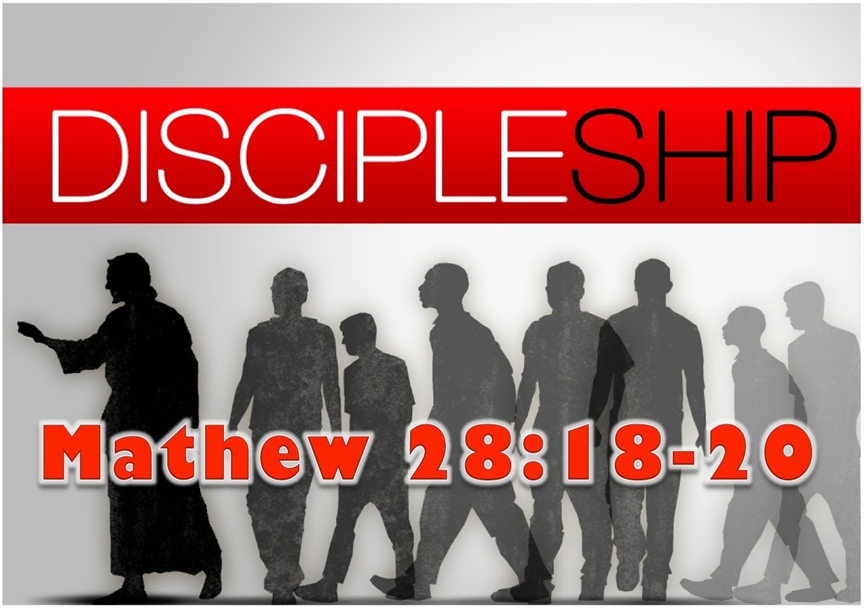
"Made New" Scripture: Matthew 28:16-20

I grew up in a Disciples church. I went to Sunday School. I went to Vacation Bible School. I was an acolyte!
And when I graduated from third grade, the church gave me my very own Bible, signed by the minister. And I really did read it each night before I went to bed.
And then, a year or two later, I got invited to attend the Pastor's Class, which would prepare me for baptism.
For six weeks, I and a few others my age spent one hour with the pastor each Wednesday after school, to learn about the Bible, the church, and the Christian faith. We even got prizes, like pencils and rulers and stickers, for memorizing the books of the Bible.
And then, on a spring day like today, during the morning worship service, we stood up and made our confession of faith. The minister asked us if we believed that Jesus is the Christ, the son of the living God, the Lord and Savior of the world.
And we said YES!
And then, the following week, we were baptized.
I was told that making the confession of faith and being baptized meant that I was a member of the church.
And being a member meant several things...
Being a member meant that I could take communion. Back in the day, many congregations didn't want you to take communion until you were baptized. The thinking was that you shouldn't take communion until you understood something about it, until you understood that it was more than just a snack.
Being a member meant that I could vote at congregational meetings. Every year we elected new deacons, elders, and board officers. In the pastor's class I had learned what each of those positions entailed. Now I could vote for them.
But not only could I vote; being a member also meant that I myself was eligible to be nominated for one of these positions. I could be a deacon! That is, if I had a suit to wear. Deacons always wore suits. And deacons were always male. Only males could be deacons or elders. Females could be deaconesses.
So it wasn't long before my parents got me a suit and I became a deacon!
Things have changed a lot since then!
Even before I left home to go to college, my home church began allowing women to be elders and deacons. And they also began allowing people who didn't have a suit to wear serve communion. Incredible, right?
Things continued changing. Eventually I went to seminary, and one day my professor who taught the theology of worship went so far as to question why children couldn't receive communion.
Of course, I had my answer to that: children should wait until they are old enough to understand. But my professor said communion is a meal of great thanksgiving, not too different from that feast we celebrate on the fourth Thursday of every November. Yet we don't forbid children from participating in our family Thanksgiving meals, do we? We allow them to participate, to eat, and over time they learn the significance of the meal through their participation.
They learn by participating.
Why should communion be any different?
I had to admit, he had a good point.
So I agreed that anyone could take communion. Even unbaptized children.
At the time, it was a stretch for me; but today, I can't imagine NOT welcoming ANYONE to the Lord's table, for any reason.
If I invite you into my house on Thanksgiving, I’m not going to tell you that you can’t have any turkey. And if I invite you to church on Sunday morning, there’s no way I’m going to tell you that you can’t receive communion.
But because I had originally learned that taking communion was tied to being a member, I did start wondering just what it actually means to be a member of the church. What does it mean? I had learned as a child that being a member meant that you could receive communion, but now that definition was changing.
So I started asking people: what does it mean to be a member?
I acted like I was engaging in the socratic method of teaching - teaching by asking questions, like Jesus did when he said, “Who do people say that I am? Who do YOU say that I am?” But really, I just didn’t want to admit that I myself - a pastor - wasn’t sure what it meant to be a member.
What does it mean? Is being allowed to vote the only reason to become a member? Is being allowed to vote for deacons and elders and board officers ...the only reason to get baptized?
If that’s all it means, then no wonder we’re not very good at evangelism. No wonder we’re not very good at getting people to join the church.
I’ve heard that some churches have stopped keeping track of membership altogether. Membership doesn’t really matter, they say. There are members who never participate, and there are nonmembers who are very active, and who’s to say that just because you have an asterisk next to your name in the church directory that you are any better of a Christian than anyone else?
More and more, this way of thinking made sense to me. Why do we even need to keep track of membership?
On the other hand, I knew that the denomination wants us to keep track of members, and I eventually learned that the government wants us to keep track of members as well. For legal reasons, we need to know who is a member and who isn’t; who has a say in the business of the church, and who doesn’t.
In other words: who gets to vote, and who doesn’t.
That is important.
But it’s not why people join the church.
Isn’t there something more to being a church member? Isn’t there something more to baptism than that? Did John the Baptist summon people to be baptized just so they could vote on board officers? Is that why Jesus told his followers to baptize people?
Of course not.
We do need to keep track of members. But more important than membership is what today’s scripture talks about.
Discipleship.
Jesus told his followers, those he had already called to be disciples, to go into all the world, and make disciples of people from every nation… and he told them to baptize them as a sign of their discipleship.
Applied to the church today, a disciple is a member… but that’s not all a disciple is. A disciple is a member, but a disciple is so much more.
A member gets to vote, but a disciple is present. A disciple is passionate. A disciple is committed.
Committed to the way of Jesus.
A disciple is someone who is constantly learning. An apprentice.
A disciple is someone who wants to grow in faith.
A disciple is someone who wants to love and serve others, as Jesus loved and served.
A disciple is someone who is being transformed, and who invites others to transformation.
In some organizations, members expect to receive. You join a fitness club, you expect to receive the benefits. You join a wine club, you expect to receive the benefits. You join the petroleum club, you expect to receive the benefits.
And that’s fine… except when it comes to church membership. Church membership isn’t like that.
So it makes sense that, in the New Beginnings program, we were presented with a chart that showed the differences between being a member and being a disciple. A lot of people think of church membership the same way they think of membership in any other organization.
But it’s not. Church membership is different.  Church membership is based on discipleship.
In our New Beginnings material that chart shows the difference between a membership model and a discipleship model. I’m not ready to completely throw out the idea of membership, but we definitely do need to think of membership in a different way. We need to think of membership in terms of discipleship.
In the church, the two are linked.
Every member of the church should think of themself as a disciple.
A disciple is a person who has been transformed. A member may or may not have had their life transformed.
It is quite easy to be a member of a church yet keep living as if Jesus is nothing more than a curiosity.
It is quite easy to attend church as a member, but disciples don't just attend church. Disciples know that they ARE the church.
A disciple is someone who has been transformed.
And the church needs to have people who have been transformed. The church needs to have people whose lives have been radically changed by the teachings of Jesus; people who have surrendered themselves to Christ; people who have read the Sermon on the Mount and have found a radically new way of living calling to them... people who have been born again.
The goal of our new beginnings program is to transform our church, to make our church born again, but a transformed church starts with transformed people.
Making disciples of all nations - is about transforming the world.
But only a transformed church can transform the world.
And only transformed people can transform the church.
Aye you ready to be transformed?
The church will not be transformed unless the people who make up the church are transformed. The church will not be able to make disciples of all nations unless the people in the church are themselves disciples, people whose lives have been radically altered by the life-changing message of Jesus Christ.
This whole New Beginnings program is about the transformation of the church. In 2000, the Disciples of Christ set a goal of establishing 1,000 new congregations and transforming 1,000 existing congregations by the year 2020. We are working to be one of the 1,000 transformed congregations.
But what I’ve realized this week is that our congregation will not be transformed unless each of us takes it upon ourselves to be transformed, to invite the Spirit of God to come into our lives and make us new. We will not be making any new disciples unless we recommit ourselves to being better disciples.
Every day, we need to invite the Spirit to enter into our lives and reshape us. The Spirit is already here: The Spirit is in you. The Spirit is as close to you as your own breath. You don’t have to go looking for the Spirit.
You just need to acknowledge the Spirit. Welcome the Spirit. Receive the Spirit.
And let the Spirit's transforming power flow through you.

Sunday, April 20, 2014

New Life (Matthew 28:1-10)

Easter Sunday is the beginning of a 50-day period in the church calendar dedicated to hope, renewal, and new life.  It lasts until Pentecost, a day which commemorates the in-dwelling of God’s spirit among us and within us.
There are eight Sundays in this 50-day period, including Easter Sunday and Pentecost.  It’s a good time to remember that our congregation is itself seeking and experiencing hope, renewal, and new life. 
Last week I talked about the death of the church, and yes, in order for new life to come, the old life must pass away.  I once heard our General Minister Sharon Watkins say that in the church today, it often feels like death – that’s what people tell her – but her response is that transformation does often feel like a death experience.  Anytime you have to let go of the past, let go of what’s familiar – even if it’s to make way for something new – it can feel like a death experience.
But today’s focus is on that “something new.”  Today’s focus is hope, renewal, and new life.
We have a couple of youth and adults who are thinking about baptism and becoming members of this congregation.  This is a reminder that we as a congregation are always changing.  We are not the same congregation we were a year ago.  In fact, every time we lose someone or gain someone, we become a new congregation.  We are always becoming something new.  The congregation that was is always dying, and the congregation that is and will be is always being born.

Traditionally, churches will have a class for youth who want to be baptized, and a class for adults who want to become members: A “Pastor’s Class,” a “Baptism Class,” a “New Member’s Class,” or whatever you want to call it.  The challenge, however, is that people these days lead incredibly busy lives.  Finding a time when everyone could meet – even if it’s just 2 or 3 people – proves to be impossible!  People are just so busy these days.
As a church, we can complain about that.  We can mourn forever the church and the society that once was.  Or, we can meet the challenge of embracing the church that is being reborn, and find new ways to do thing.
I choose the latter.
So here’s what I’ve decided:  We’re going to have a baptism class, and the class begins now.  This very moment.  You all are a part of it.  Maybe you took a Pastor’s Class many years ago and thought it was a one-time thing.  Well, think again. 
Our classes will last for 8 weeks, until Pentecost Sunday – June 8.  On that day, we will welcome new members into the church, we will baptize those who want to be baptized, and we will celebrate with a big party after worship. 
Each “class session” will have two parts.  Part one is the sermon, in which I will introduce a topic or two.  Then, after worship, we’ll have part two, which is the discussion time.  In the fellowship hall, the tables will have discussion questions for you to discuss with one another. 
Don’t skip out on the discussion time; as much as my own ego may like to think otherwise, it’s the discussion time, and not the sermon, that will be the heart of these eight weeks.
Plus, you get to have refreshments.
I’ve chosen, as the basis for these classes, a list of 12 “Principles of Identity” that I found on the Disciples of Christ website.  Now, you don’t have to have mastered the quadratic formula to realize that 12 principles and 8 weeks means that some weeks we will have more than one principle, and that is the case today.
And one more thing:  all 12 of these principles of identity come out of our identity statement.  And since this is a class, I’d like for us to recite that identity statement together:
We are Disciples of Christ, a movement for wholeness in a fragmented world.  As part of the one body of Christ, we welcome all to the Lord’s Table, as God has welcomed us.
If you’ve been around awhile, you’ve heard that before.  With every sermon I preach, this statement is in the back of my mind, and I’ve shared it with you often.  It wouldn’t hurt you to memorize it.  Memorize it, and I’ll be sure to put a little gold star next to your name on the class roster.
Today we have two principles of identity, and the first is this:
We participate in God's mission for the world, working with partners to heal the brokenness of creation and bring justice and peace to the whole human family.
This follows directly from the identity statement.  We participate in God’s mission for the world; we work to heal the brokenness of creation; we bring justice and peace to the whole human family.
Being a Christian, being baptized into Christ, means that we follow Christ.  Right?  We live the way Christ lived, and we do the things he taught us to do.  Jesus was committed to God’s mission for the world, and so we commit ourselves to that mission as well.
What is that mission?  One way that Christ’s mission can be stated appears in the 4th chapter of Luke.  It’s the beginning of Jesus’s ministry, and he’s in the temple, basically introducing himself and what he stands for to the world. 
He reads the following words from Isaiah:
The Spirit of the Lord is upon me, because the Lord has anointed me…
What does anointed mean?  It means marked in a special way.  Literally, that mark came in the form of oil that was placed on one’s forehead.  Think of Rafiki anointing Simba shortly after he was born; that anointing was a sign that Simba was destined to be king. 
Jesus was anointed.  What was he anointed for?
The Lord has anointed me; he has sent me to preach good news to the poor, to proclaim release to the prisoners and recovery of sight to the blind, to liberate the oppressed, and to proclaim the year of the Lord’s favor.
After he read this, Jesus rolled up the scroll and said, “Today, this scripture is fulfilled.  In me.”
Jesus has a mission to heal the brokenness of creation.  There are things wrong with the world, and Jesus’s mission is to make them right.  There are people who are suffering, and Jesus’s mission is to bring them good news, news that their suffering is over, or at least, that they no longer have to suffer alone.
And throughout the gospels, you see Jesus helping those who have been bullied, and confronting those who bullied them.  Usually it was the powerful, the rulers, and the religious leaders who passed laws and enforced rules that made it harder for poor people to live.  Their system was a broken system.  It didn’t help everyone, it only helped a few.  That wasn’t right.  Jesus’s mission was to heal that brokenness, and make the world a better place for the whole human family.
As followers of Jesus, that is our mission as well.  To defend the poor.  To speak out for those whose rights have been taken away.  To stand up for those who are being bullied.  And to make sure that our world is a world in which everyone is able to feel secure, safe, and whole.
In bringing wholeness to people, Jesus brings them new life.
The other principle I want to share with you today is similar:
 We anticipate God's coming reign, seeking to serve the God - Creator, Redeemer, and Sustainer - whose loving dominion has no end.
Jesus talks an awful lot about the kingdom of God.  Matthew’s gospel calls it the kingdom of heaven, but that’s the same thing.  Some scholars today like to refer to it as the “reign of God.”    
Here’s what those words mean:
The kingdom of God – or the reign of God – describes what the world would be like if everything were as God would want it.  If God were in charge, and all people followed God’s teachings, that would be the kingdom of God.
Now when we do the things Jesus has taught us to do – when we speak out for those whose rights have been taken away, when we stand up for those who are being bullied, when we work to make our world better – we are working to make God’s kingdom come.  We’re working to make it happen.
This is why we pray, every Sunday, for God’s kingdom to come on earth as in heaven.
God’s kingdom becomes real when we care for one another and all the people of the earth.
God’s kingdom becomes real when we care for the earth itself, taking care of creation and all creatures.
God’s kingdom becomes real when we don’t just think about what we want, but we think about what others need.
Jesus said that God’s kingdom is at hand.  He said that it starts right now.  He said that the kingdom is present right now.  Because whenever you care for someone, show kindness to someone, express love to another human being, you are doing the work of God… and God’s kingdom is present in that moment.  The good work you do makes God’s kingdom present.
This is so important to followers of Christ.
For Jesus, it was important enough that even when the people in charge told him to “stop or we’ll kill you,” he kept doing it.  It doesn’t always seem like a big deal to show kindness or love to someone, but it is, and sometimes it can require a lot of courage. 
When Jesus announced his mission by reading those words from Isaiah, the people who heard him were so upset by what he said that they ran him out of town, and even tried to throw him off a cliff. 
It takes a lot of courage to stand up to a bully, especially when that bully is a Roman soldier or ruler.
It takes a lot of courage to show friendship to the person who everyone else makes fun of.  Everyone will look at you and say, “You’re hanging out with that loser?  Why?”
People said that to Jesus.  But Jesus knew that the people he became friends with weren’t “losers;” they were children of God.
I remember once, a long time ago, someone told me that a teenager I knew would probably have killed himself, but the reason he didn’t was because of the kindness I and a few others had shown to him.  Now, showing kindness to this particular teenager wasn’t that hard, and I was surprised to discover that it was so important.  Little acts of kindness and love shown to him really did give him new life.
But we’re called to show kindness to others even when it’s not easy.  We always have the opportunity to show kindness.  We always have the opportunity to be a friend to someone. 
That’s what followers of Jesus do.
That’s how we participate in God’s mission for the world.
That’s how we heal the brokenness.
That’s how we make God’s kingdom a present reality.
And that is how we live as Easter people, because in showing kindness and friendship to all, to strangers, to those who most need kindness and friendship in their lives, we make it possible for new life to happen.


Sunday, April 24, 2011

"YES!" (Matthew 28:1-10)

Good morning! Let us praise God, for God is good! Christ is risen; new life has come. Hallelujah! God is good, all the time. All the time, God is good.


God is good, even in the midst of tragedy. We’ve seen quite a few tragedies lately. It’s easy to say “God is good” in church on Sunday morning; it’s a little harder to say it when we hear the day’s news. The catastrophe in Japan, after many weeks, is still unfolding. The nation of Haiti, suffering even before the earthquake there, is still far from putting itself back together more than a year later. There’s violence in Libya, fighting in Afghanistan, bombings in Belarus, school shootings in Brazil.

Here in the U.S., regions back east are recovering following last week’s deadly tornadoes. Meanwhile, reports released last week show that the rich have never been richer, that the very richest among us are paying less taxes than ever, while at the same time, the poor are being made to carry an ever-increasing burden, and public education is being neglected as we turn our backs on future generations. These things are just as tragic as everything else that has happened. This is the type of man-made tragedy described by the prophet Isaiah, who cried out: “Ah, you who write oppressive statutes to turn aside the needy from justice and to rob the poor.”

What in God’s name is going on? Where is the good news of Easter in the midst of all this bad news? The other day, Anne Lamott – who spoke at Chapman University last month – was quoted in the news as saying that we are Easter people living in a Good Friday world. Sometimes it’s hard to see the good news of Easter when all around you, it’s still Good Friday. Sometimes I feel like the psalmist, who cried out to God in a time of trouble, but found no comfort; the psalmist who said: “My soul refuses to be comforted. I think of God and I moan. I am so troubled that I cannot speak. Has God’s steadfast love ceased forever? Has God forgotten to be gracious? Has God’s compassion come to an end?”

Obviously, those who follow the way of God are not immune from suffering. Scripture seems to imply that the patriarchs – Abraham, Isaac and Jacob – were blessed because they followed God; because they followed God, they were spared from suffering and tragedy.

But the writer of Ecclesiastes takes issue with this. He says: “Wait a minute – that’s not true. I have seen good people suffer, with no one to comfort them; and I have seen evil people prosper. What’s the point? What is the meaning of all this?” Where is the “good news?”

In all of scripture, no one’s suffering is more famous than Job’s. Job experienced just about every form of suffering imaginable; and no one was as good as Job. One minute he was blessed, and in the next minute, everything was taken from him.

Just like anyone who has suffered deeply or who has ever witnessed the deep suffering of others, Job tried to make sense of his suffering. He searched for some explanation. He cried out: WHY? But he found no answer.

Job’s friends witnessed his suffering, and figured that there must be some explanation as to why these things happened. There had to be, right? So they offered to Job their easy answers. They said to Job that, obviously, he must have done something wrong in order for God to punish him like this.

It is tempting to search for easy answers. How many of you heard, following 9-11, some preacher in the news quoted as saying that the attack on America was God’s punishment? Or that AIDS is God’s punishment? Or that the earthquake in Haiti, or Hurricane Katrina, that these are God’s punishment for the sins of the people?

Just like the disciples, who asked Jesus about the man born blind (“was it because of his sins or his parents’ sins that he was born blind?”), it is so tempting to seek out the easy answers.

Job knows better. “I refuse to believe that God operates that way,” Job says. He has no answer. He does not understand the reason for his suffering, or if there even is a reason. But he does know that his suffering is not punishment from God, because that’s not the way of a loving, compassionate God.

Suffering is a part of human existence. Nations suffer. Communities suffer. Families suffer. Individuals suffer, sometimes in silence. Maybe someone here today is suffering.

It was into a world of suffering, a world where life itself is a struggle, that Jesus was born. Some of that suffering seemed to have no reason behind it, like the suffering of the man born blind. But other suffering came about because of the way people treated one another; especially, the way those in authority treated those under them.

Many believed that the path to the least amount of suffering was to play by the world’s rules. Play by the rules, and you will have some measure of security against suffering.

What were those rules?

1. Store up wealth for yourself

2. Make friends in high places

3. Love yourself above all others

4. Don’t upset Caesar

Two centuries later, these rules still haven’t changed much. Everyone wants to be rich. Gaining wealth is supposed to make one happy, even though so many make themselves miserable working to earn money. Everyone also wants to have friends in high places; much of life’s security still depends on “who you know.” People still place their own needs above the needs of others; one person’s right to do what he or she wants is believed to be more important than the negative effect that exercising that right has on others. How else could we justify all the pollution we create?

And as for not upsetting Caesar? Well, don’t ever challenge or critique the shortcomings of capitalism, patriotism, militarism, or western Christianity, not even if your intention is improvement or reformation. People don’t want to hear it.

Those are the rules for an easy life, a life free from trouble. Store up wealth; make friends in high places; love yourself above all others; and don’t upset those with power.

But you know what? The rules don’t always work. Suffering still comes.

Jesus did not play by those rules. He had no wealth and few possessions, not even a home where he could entertain guests. He had few friends in high places, but many more friends in low places: fishermen, tax collectors, various types of “sinners.” He was overly concerned not with his own needs, but with the needs of others; his compassion was so great that he repeatedly sacrificed his own “me time” in order to minister to the needs of others. And, he was not afraid of upsetting Caesar.

Jesus believed that the rules of the world do not lead to a better life. Wealth, power, influence: these things are way overrated.

Instead of blessings of wealth, Jesus said that blessings come to the poor. Instead of the blessings that come from never going hungry, Jesus said that blessings come to those who thirst and hunger for justice and for what is right. Instead of blessings that come from having power, Jesus said that blessings come to those who make peace. Instead of blessings that come from going along with the crowd, going along with Caesar, and playing by the world’s rules, Jesus said that blessings come to those who are persecuted; that blessings come to those who suffer.

And because Jesus did say these things, he did suffer. The world rejected him, because he didn’t play by the world’s rules. Instead of choosing to escape suffering, he chose to identify with those who suffer. He believed in a different way of living, and was persecuted as a result. Because of that, he suffered. Because of that, he was crucified.

It is one of the great mysteries of our faith that Jesus, though he was a human like you and like me, he was also filled completely with the spirit and presence of God. In Jesus – in this human being – God was fully present. Which means that God fully shared in the suffering of the one who fully shares in our suffering.

To say it more plainly, it means that God fully shares in your suffering. When you suffer, God is there. With you.

It’s like that TV show Undercover Boss. Have you seen it? The big CEO leaves his big office with the padded leather chair and goes to work undercover at one of his company’s entry-level jobs, flipping the burgers, cleaning toilets, experiencing the frustration of dealing with upper management … and getting to know, on a personal level, the front-line employees and the struggles they face.

God has left his throne in the clouds (if it can be said that God was ever there at all) and has come to earth, to dwell among us, to know us, to experience all that we experience.

What wondrous love is that, that God would do that for us! That God would choose to suffer with us!

And then, when Jesus struggled, suffered, and died … When this world said NO to Jesus and what he lived for in the most powerful way it could, … God took that NO and turned it into a YES by raising Jesus from the dead.

The world denied Jesus and all he stood for.

God affirmed Jesus and all he stood for. God affirmed Jesus’ life of compassion, his life of selfless giving, his life of bringing hope and solidarity to those in low places, his life of identifying with those who suffer, his life of making peace and establishing justice. And even though Jesus suffered and died, God raised him to a new life that is infinitely deeper and more abundant than anything this world has to offer.

Suffering is often unexplainable, and it is often unavoidable. Often there is no easy answer to the question, “Why?” The good news is that God’s compassion is so great – that God’s love for you is so great – that God shares your suffering with you. God knows what it’s like to suffer, because, in Jesus, God experienced suffering himself.

And when we choose to exercise that same compassion and that same love by sharing in the suffering of others, sacrificing our own lives for the sake of the poor, the oppressed, working to bring God’s kingdom to earth as it is in heaven – when we risk losing the life that this world offers, giving that up for the new life God offers – then we are truly blessed. Blessed with the “YES!” of God. Blessed with a deeper, richer, more abundant life we could ever have imagined.

When you live according to the way of Jesus, you live contrary to the way of the world. The world may tell you NO; but God tells you YES. The world may deny you the life you are trying to live; the world may try to take that life away from you. But God gives you new life. New life in Christ’s name.