Showing posts with label John 11. Show all posts

Sunday, March 26, 2023

Weeping with the World (John 11:1-45)

There is a lot of really hard stuff going on in the world right now. I suppose that much of it has always been there, but now, because of how fast we communicate via the internet and social media, and how readily available all the world’s news is to us, we are more aware of all that is happening.

We’re aware of wars happening, in which too many innocent lives are shattered.

We’re aware of the impending climate catastrophe, and how each year brings storms and droughts that are more severe than we’ve ever seen.

We’re aware of the truly difficult circumstances many people face. The other day I watched a film called The Kings of the World, about a group of boys in Colombia who have been marginalized and excluded from humanity. The movie is fiction, but I could tell that it reflects the real (and tragic) experiences of far too many marginalized people in many parts of the world. 

We’re aware of rights being taken away from people because of their race, or their sexual orientation, or their gender identity, and the tragic consequences this brings not only for the immediate victims of such actions, but also, the tragic consequences for a country that supposedly stands for liberty and justice for all.

We’re aware that younger generations are now facing a much more difficult path due to how corporations and politicians have shaped our economy. We immediately bail out banks, but we cut aid to the poor, denying health coverage, and we refuse to cancel the debts of those struggling to pay off student loans. If you’re born into wealth, the economy’s great; but for everyone else, things just keep getting harder and harder.

Some of these things, we’re aware of through the information media; and some of them, we experience personally. 

And it’s tough.

We trudge on, we do our best, but inside, we just want to curl up in a corner and cry.

And, yes, we need hope; but hope is shallow and weak if it does not first acknowledge the despair that is so prevalent.

So maybe the folks who put together the lectionary knew what they were doing when they scheduled today’s reading from John on this 5th Sunday in Lent, the Sunday before Palm Sunday and two weeks before Easter. Because here, in today’s scripture:

Jesus weeps.

And yes, he does then raise Lazarus back to life.

But first, he weeps. 

I recently heard Nadia Bolz-Weber, who is an author and the founding pastor of House for all Sinners and Saints in Denver, say that, right now, she needs stories of Jesus seeing and being moved by human grief, because the grief over the suffering of her friends, her family, and the whole world—the grief because all that’s happening—sits so heavy upon her.

I know that a lot of us try to put on a pretty face, to hide the suffering and the grief and the struggle. I know, because pastors do that, too. 

We put on that mask and try to pretend that everything is OK. After all, our faith tells us that, in the end, everything will work out for good; and I truly do believe that.

But right now, in this moment, a lot of things aren’t so good. 

Each of us carries a load, and we’re expected to keep up the pace as we carry it, but for many, that load just keeps getting heavier and heavier. We try not to let the strain show, but the truth is, we’re wearing ourselves out. 


Like many people today, Mary and Martha were carrying a heavy load. They lived with the oppression of a patriarchal society, the oppression of Rome, and the economic oppression of a world where the wealthy elite rigged the economy in their favor, making life a difficult struggle for everyone else. 

On top of that, now, their brother Lazarus was dead. 

For Mary and Martha, there is no mention of husbands, so if Mary and Martha were unmarried, it’s likely that Lazarus, their brother, was their protector, their provider, the one who could speak for them and manage their affairs.

So, they grieved for their brother Lazarus, because they did love him; but they also grieved for themselves, because now life would get so much harder for them, since they now had no male family member to act on their behalf. 


When Jesus arrived, Lazarus had been dead for four days, and Martha and Mary were consumed by grief.

It’s significant to note what Jesus did not do when he arrived. Jesus did not try to make light of their suffering. He didn’t try to explain away Lazarus’s death by saying to Martha and Mary, “It’s all part of God’s plan,” or, “God must have needed Lazarus more than you.”

Jesus did say to Martha, “Your brother will rise again.” I think in saying that, he was engaging with Martha where she was at. 

He didn’t say those words to Mary. He didn’t really say much to Mary at all. 

He had a nice conversation with Martha, but not with Mary. He didn’t even respond to Mary’s question—even though it was the same question Martha had asked him. 

This was Jesus meeting each person where they were at. Jesus knew that, while Martha maybe wanted a response, Mary didn’t. She just wanted his presence. She just wanted him to acknowledge how intense her grief was. She just needed him to be with her, to make space (or hold space) for her grieving.

And Jesus felt the same grief Mary felt. That’s what compassion is, to feel the grief, the sorrow, the suffering of another. Jesus felt her grief, because it was his grief, too.

And Jesus wept with Mary. He made space for her grief by grieving with her. He didn’t jump to hope without letting grief have its moment.

—---------------------------

A source of great fascination for me is the nature and character of Jesus. What was Jesus like? What was he really like?

So, a Jesus who weeps is something that grabs my attention. What does it say about Jesus’ nature and character, that he weeps? And, is the way I preach and teach about Jesus (the way that I present Jesus) consistent with that?

I think about the fact that many of the religious leaders in his day were offended by the things Jesus said and did; and many religious leaders today are likewise offended. 

Whereas the religious leaders in Jesus’ time tried to get rid of him, today’s religious leaders remake Jesus into something he’s not. They change Jesus—they present a version of Jesus whose nature and character aren’t the same as the Jesus we read about in the gospels. In their preaching they present a Jesus who thinks and acts like they do.

They change Jesus into something he’s not, instead of changing their own ways of thinking and acting to be more like Jesus.

As a religious leader myself, I want to do what I can to avoid this temptation.

So: A Jesus who weeps. (I need to sit with that awhile.) A Jesus who is overcome by emotion and sadness. A Jesus who is greatly disturbed by what’s going on.

Does that challenge your idea of what Jesus is like?

Apparently, the sorrows of this world matter so much to Jesus that he allows them to affect him. He’s even, dare I say, overcome by emotion, here in this story, and at other times in scripture.

Maybe wrapping my head around this is a challenge for me because I’m so good at not letting my emotions overwhelm me. I keep my emotions under control, or at least, hidden away, out of public view. That is, after all, the American way.

What can we learn from Jesus, and the way he weeps over Lazarus, the way he weeps with Mary, the way his soul is greatly disturbed by the events taking place?

It’s a lot to think about, and there is more than one answer. For me, though, I take comfort in knowing that, when I’m sad, Jesus shares my sadness. When I’m troubled, Jesus is troubled, too. When I’m feeling like the state of the world is hopeless, Jesus is also saddened by the state of the world…

And before Jesus offers any easy solutions or verbal encouragement, Jesus is going to share my sadness and my trouble and is going to hold space for my despair.

Like Nadia Bolz-Weber said, that’s the Jesus we need, because the weight of all we’re going through these days sits so heavy upon us.

But Nadia-Bolz Weber also points out that Jesus does also give us something else we need: stories of resurrection and hope.

The struggles of this present moment are real, but so too is the victory that life will have over death, and the victory that love will have over hate, and the victory that affirmation will have over rejection.

We’re living in a “fifth-Sunday-of-Lent” time. We see where we’re headed: Holy Week. Good Friday. Death on a cross.

But beyond that, there is Easter.There is resurrection. And nothing is going to stop resurrection from coming.

And if that’s hard for you to see, then just look around. The trees are budding and the flowers are starting to bloom. Nature itself is being recreated all around us, as it does every spring. God hasn’t given up on the world, and God hasn’t given up on you.


Sunday, November 4, 2018

A Sermon for All Saints - John 11:35

Some of you may be familiar with John 11:35. You may even have it memorized. In the New Revised Standard Version it is only four words long - “Jesus began to weep.” However, some of us are old enough to remember older versions of that verse, which took those four words (“Jesus began to weep”) and made them two: “Jesus wept.”
And there may be one or two here who were encouraged to memorize verses in Sunday School, maybe even got a gold star or a check by their name for every Bible verse they memorized, and here was a verse that was only two words long. “Jesus wept.” The shortest verse in the Bible, and very easy to memorize. Memorizing that Bible verse was the easiest gold star we ever earned.
Jesus wept.
Jesus had been summoned to the tomb where they had placed his dear friend Lazarus. As he approached the tomb, he began to weep.
What does it mean that Jesus wept?
It means tears welled up in his eyes and rolled down his cheeks.
It means the sadness, the grief, Jesus experienced was real, true, genuine.
Even though Jesus had complete, real knowledge of the resurrection, Jesus was also human. Jesus loved people. He loved Mary and Martha and their brother Lazarus. They were very dear to him. And he shared in Mary & Martha’s sadness when Lazarus died.
Jesus wept.
It means Jesus was fully human. Of all the gospels, the gospel of John has the highest christology, which means that in the gospel of John, Jesus’ divinity is emphasized. John’s gospel begins by explaining how Jesus, the Word, was in the beginning with God, and that Jesus, the Word, was God.
According to John’s gospel, Jesus is God.
But even here in John’s gospel, Jesus is also fully human, capable of shedding human tears.
The first day of November is All Saints’ Day. Since All Saints’ Day doesn’t always fall on a Sunday, we and many other congregations observe All Saints’ Sunday on the first Sunday in November.
This is a day to celebrate, to remember, to mourn, to weep, to laugh, and to anticipate with hope what the future will bring.
In every year, there is loss. We lose loved ones. We lose old ways of doing things. We lose abilities we once had. And some dreams that we once had, we have to let go of.
In every year, there is also great blessing. And, by God’s grace, some of the greatest blessings come even in the midst of loss and sadness.
We may have lost loved ones, but their love motivates us to live in ways that are more loving and more kind.
We may have lost loved ones, but the support and love we received from others in our moment of sadness makes us realize just how precious these relationships are.
We may have lost certain abilities we once had, and we may have had to let go of some of our dreams, but if we meditate on such things, we realize that this “letting go” has helped us recognize more than ever our dependence on God and God’s grace.
In the past twelve months, I have lost both my Mom and my Dad. I also lost my stepmom, who’s funeral was just last week.
Obviously, one expects there to be sadness involved here, and there has been, but I have also found much to be thankful for. Most significantly, for the relationships within family and among friends, and for the love and support that has been shared.
In the past twelve months - actually, in the past twelve weeks - Ginger and I have said goodbye to Ethan and Tristan. Ethan is in Tucson, and Tristan is at UC Irvine.
Obviously, one expects there to be joy at their accomplishments and new opportunities, and there is, but I have also found sadness in their absence. One day a few weeks ago, I became aware of just how much I missed having my sons around, and that in turn reminded me just how much I miss my parents…
And it all kinda snowballed.
And maybe it’s because I majored in sociology, or maybe it’s just because I’m a little weird, but it’s been fascinating for me to observe, as if from a distance, how I and those around me have experienced both sadness and joy, together, during this time, and how both sorrow and gratitude have existed, together, side-by-side.
I wouldn’t have thought one could experience such deep sorrow and such overwhelming gladness simultaneously.
Jesus wept.
He wept even as he knew fully the hope of resurrection. I think I understand that better now. Jesus knew the joy of the resurrection, he fully understood the good news because he is the good news… yet at the same time, he also wept.
Another way to say this is that I think Jesus was an emotional wreck! A mess!
Do you think that was confusing to him, that he could be both happy and sad at the same time? Or do you think he was fascinated by it? Or do you think he was just, “Of course it can be this way…” ?
“Of course it can…”
Well, what about this New Beginnings process that we are working on? Or even what about all the ways Bixby Knolls Christian Church has changed over the years, even without New Beginnings?
It is good and appropriate to feel sadness over losing the church that once was. A congregation is changed by every person who dies or leaves, and by every person who joins.
Every single person.
Your presence here, as a single individual, has forever changed this congregation.  And your absence, should you ever leave, will also forever change this congregation.
We miss the people who were once here and, for whatever reason, are here no longer. But we also celebrate who they are (or were), and we celebrate the impact they had on us, the way God was revealed to us through them.
We miss the programs and activities of the past. We mourn not being able to do the things we, as a church, once did. But just like it says in the scripture read at my stepmom’s funeral last Sunday afternoon, to everything there is a season, including a time to be born, and a time to die… a time to laugh, and a time to weep.
It’s OK to be sad about the church we once were. We can do that, AND at the same time be hopeful and excited about the church that we are becoming. And we can be thankful for the groundwork that was done by those who came before us, those who built this church, who sacrificed so much time and energy and money into making this congregation possible…
And we can let their dedication to this church inspire us. They have run the race, and the baton has been passed on to us. They no longer belong to this physical realm, but now live in a world that is beyond our imagining.
Now the race is ours to run. We would not have got to this point without those who came before us. But the baton has been passed to us. Now it’s our turn.
So let us not forget that there will be others who will come after us. Let the commitment of those who came before us inspire us so that we may commit ourselves, dedicate ourselves, and all we have, to create a church that will continue to work for justice, show forth love and kindness, and walk humbly with God.
So much sadness. So much sorrow. So much joy. So much hope.
Thanks be to God.

Sunday, April 2, 2017

Sermon: "Spiritual Boot Camp: Hitting the Wall" (Ezekiel 37: 1-14)

This is the last sermon I’ll be preaching during our Spiritual Boot Camp. The Spiritual Boot Camp does continue next week, on Palm Sunday, with a very special musical celebration.
I do hope you have been following along at home, praying ten minutes each day, and doing the other exercises. If you have, your faith has grown and deepened during this season of Lent. I am sure of that. If you haven’t, it’s never too late to start.
Like so many other things in life, spiritual growth does not occur along a straight line. It’s not a smooth, steady progression. The path meanders, there are hills and valleys… and there may come a time when you feel like you’ve hit a wall.
For those working for better physical fitness, hitting the wall means that, for whatever reason, you’ve stopped making progress. Maybe you’re on a diet, and you’ve lost three pounds each week for the past five weeks. But now, in week six: nothing. And the week after that, you even gain a pound. You’ve hit the wall.
Or maybe you are training for a marathon. I have no experience in this, but I’ve heard from those who have: in a long race, it may happen that you are going along wonderfully, but at some point during the race you hit the wall. You’ve run so long, you’ve depleted your body’s store of energy in the form of glycogen. All of a sudden, you can’t even walk, let alone finish the race. You’re done. It’s over. There’s nothing left.
Like a marathon, a spiritual journey is a long-distance event. And we see in the Bible that, so often, there comes a point when sojourners on the journey hit the wall. And when they do, it all comes crashing down. Everything seems to have come to an end. There appears to be no way they could go on.
This happened to the people of Israel. The people of Israel had hit the wall. At one time they were a great, mighty nation, but no longer. Their life was gone.
They said, “We are nothing but dry bones. Our hope has perished. We are completely finished.”
Ezekiel, like many prophets, spent much time challenging, confronting, and condemning. But now, with Israel having hit the wall and losing all hope, was the time to provide hope and comfort.
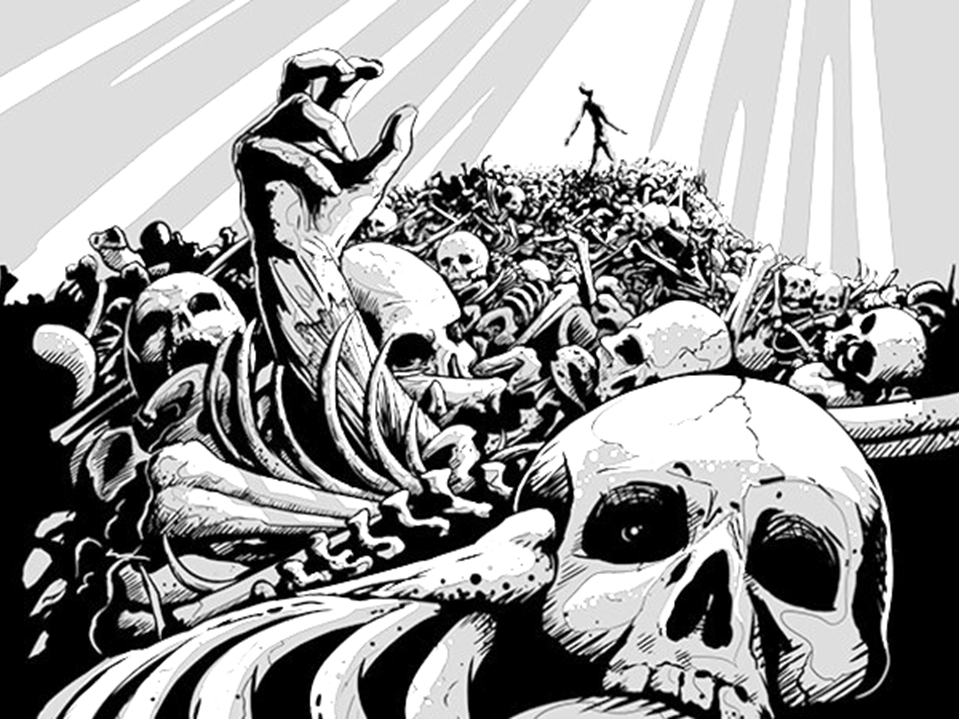
God showed Ezekiel a valley of bones. Dry bones. Bones with no life on them. Bones which had had no life for a very long time.
Just like Israel.
God said to Ezekiel: “Can these bones live?”
Ezekiel didn’t see how. It looked to him and to everyone else that the end had come for Israel. But who was he to tell God no? He replied, “Only you know, God.”
God told Ezekiel to prophesy to the bones: “Speak your word of prophecy to these dusty, dry, lifeless bones! Speak to the wind! Prophesy to the Spirit!”
Ezekiel did as God commanded. Could life come back to these dry, lifeless bones? Look! They’re rising up! The bones are coming together! Muscle tissue is stretching over them! Organs are appearing! flesh is covering it all up! They are rising, they are standing, a massive army of living, breathing human beings!
And God said: “THIS that you see is the house of Israel! I will put my breath in you and YOU will live again!”
Even when it seemed that Israel had hit the wall, that all progress was lost, that no amount of work was going to make the future any better, God intervened to say, “I will restore you! I will bring you back to life! A new day is coming, and I will work anew in you.”
Israel may have hit the wall, but God has the power to break through that wall, so that you can keep going.
There are many stories like this in scripture: Abraham and Sarah thinking they will never have children; Joseph being thrown in jail in Egypt; Moses and the Hebrews caught between the Red Sea and Pharaoh’s approaching army. Time and again, God’s people have hit the wall, reached a dead end, seeing no way forward, yet God makes a way.
In the gospel of John, there is a story about a certain man named Lazarus, who was ill. He was lifted up in the joys and concerns, but the illness kept getting worse. Mary and Martha, his sisters, sent word to Jesus. Perhaps Jesus could do something, come and say a prayer over Lazarus, and help him get well.
When word reached Jesus that Lazarus was ill, Jesus delayed going. “The illness isn’t fatal,” Jesus said. Lazarus won’t die.
Several days later, Lazarus died.
“But Jesus, you said…”
“I know what I said. Come on, Let’s go see Lazarus…”
By the time they got there, Lazarus was not only dead; he had been in the tomb for four days! Martha went out to meet Jesus as he arrived. She said to him, “Lord, if you had been here, my brother would not have died!”
This is a wall that certainly seemed insurmountable. But perhaps Martha had heard stories, like the one about the valley of dry bones, and knew that nothing was impossible, because she then said to Jesus: “Even now I know that whatever you ask of God, God will give you.”
Jesus told her, “Your brother will rise again.”
Martha replied, “I know that he will rise in the resurrection on the last day.”
Jesus said to her, “I am the resurrection and the life. Whoever believes in me will live, even though they die. Everyone who lives and believes in me will never die. Do you believe this?”
She replied, “Yes, Lord, I believe that you are the Christ, God’s Son, the one who is coming into the world.”
This is a remarkable statement of faith, and it comes at a moment when faith must have been hard, a moment when faith had hit the wall. In the Disciples of Christ church, we place a great emphasis on Peter’s confession of faith, when Jesus asked “who do you say that I am,” and Peter responded, “You are the Christ.” Why don’t we give equal attention to Martha’s confession of faith, given here, in a most difficult moment?
It was a dangerous confession to make. Just days before, after Lazarus had fallen ill but before Jesus had made his way to him, Thomas - one of Jesus’s disciples - said that if Jesus was going to Bethany to be with Lazarus, that he and the other disciples should go to, to die with Jesus there. Bethany, for whatever reason, was a dangerous place for Jesus to be - and a dangerous place for anyone to confess him as the Christ, as God’s son.
Her brother was already dead. Jesus could have saved him if he had arrived earlier, but he didn’t. Yet even now, Martha confesses her faith in him, and places her trust in him.
“Whatever you ask of God, God will give you.”
She wasn’t going to let no wall stand in the way of her faith. Not even death would keep her from believing in power of God to give life. What remarkable faith! What remarkable courage!
Martha went and spoke privately to her sister Mary, “The teacher is here and he’s calling for you.” When Mary heard this, she got up quickly and went to Jesus. He hadn’t entered the village but was still in the place where Martha had met him. When the Jews who were comforting Mary in the house saw her get up quickly and leave, they followed her. They assumed she was going to mourn at the tomb.
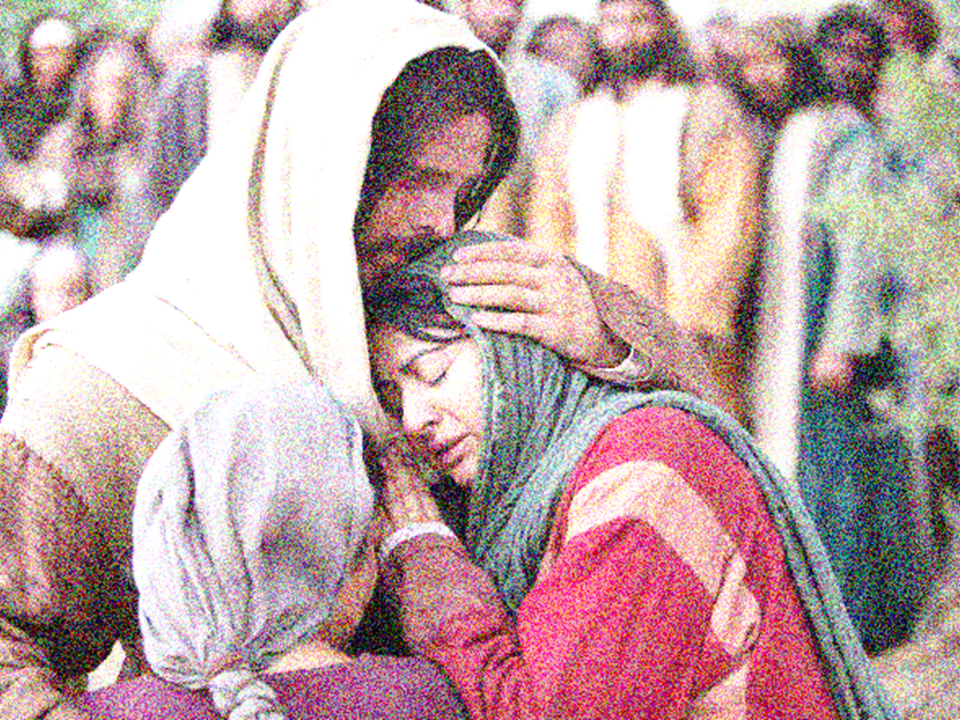
When Mary arrived where Jesus was and saw him, she fell at his feet and said, “Lord, if you had been here, my brother wouldn’t have died.” The same words that Martha had spoken to him.
When Jesus saw her crying and the Jews who had come with her crying also, he was deeply disturbed and troubled. He asked, “Where have you laid him?”
They replied, “Lord, come and see.”
Jesus began to cry. He was human, after all… and filled with passionate love for all. Bystanders said, “See how much he loved him!” But others couldn’t see past the wall, and said, “He healed the eyes of the man born blind. Couldn’t he have kept Lazarus from dying?”
Jesus was deeply disturbed when he came to the tomb. It wasn’t that he couldn’t see past the wall. It’s just that this was a very emotional moment, for him, and for people he cared about deeply. Death, life, and love were all coming together in this moment in a powerful way.
The tomb was in a cave, and a stone covered the entrance. Jesus said, “Remove the stone.”
Martha said, “Lord, the smell will be awful! He’s been dead four days.” Was she now doubting? She believed that anything was possible, that whatever Jesus asked of God, God would grant. I suppose it’s easy to say, in a general sort of way, “anything is possible,” but a lot harder to say that “this is possible.” It’s one thing to say “any obstacle can be overcome;” it’s something else to believe that “this particular obstacle can be overcome.”
Jesus reminded her of her own courageous faith, and the promise he made to her. He said: “Didn’t I tell you that if you believe, you will see God’s glory?” So they removed the stone. Jesus looked up and said, “Father, thank you for hearing me. I know you always hear me. I say this for the benefit of the crowd standing here so that they will believe that you sent me.”
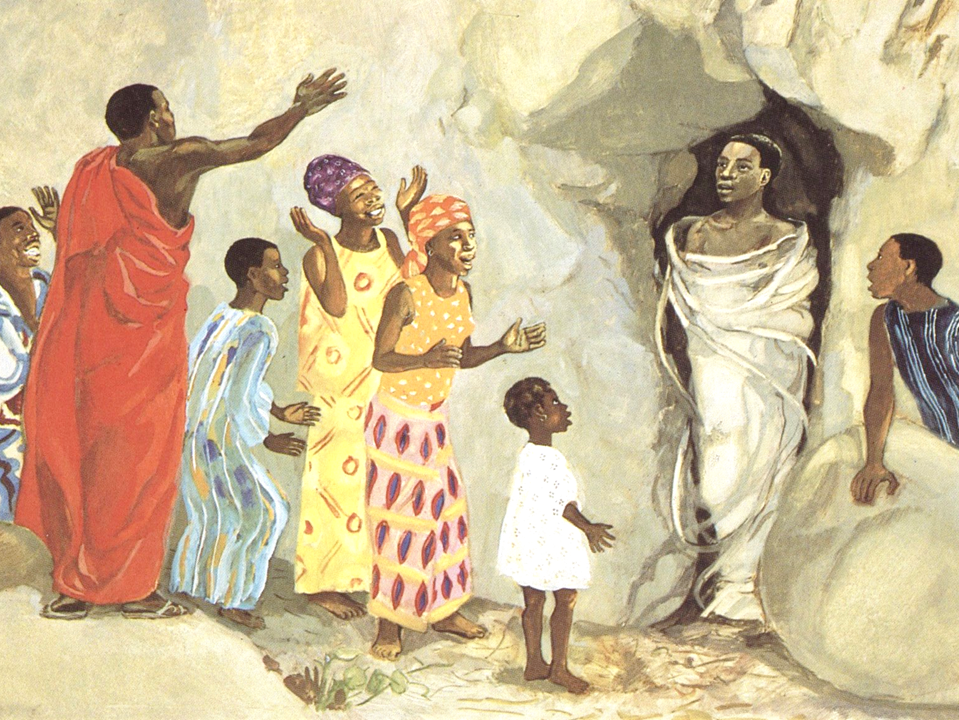
Having said this, Jesus shouted with a loud voice, “Lazarus, come out!” The dead man came out, his feet bound and his hands tied, and his face covered with a cloth. Jesus said to them, “Untie him and let him go.”
There will always be obstacles to overcome in life. Whether it’s dieting, or working out, or pursuing a deeper faith.
There will be times when it feels that you’ve hit the wall. You’ve pushed and pushed, tried and tried, and you’ve got nothing left to give. The wall won’t budge.
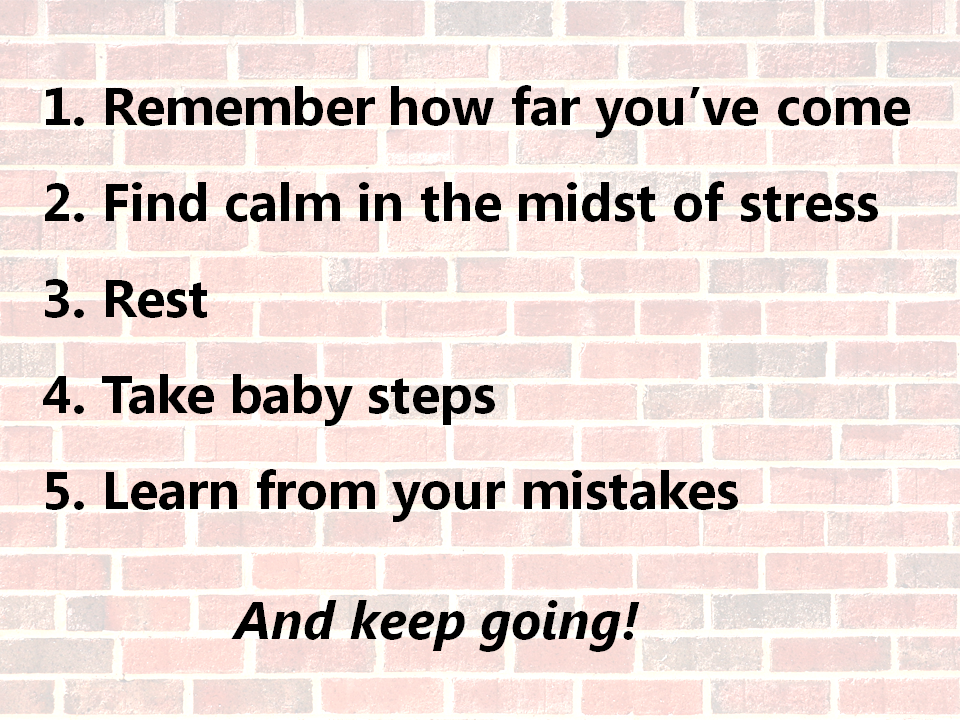
According to buildingmuscle.com, there are several things you should remember when you hit the wall:
  1. Put things in perspective. Remember how far you’ve already come! Remember what you’ve already accomplished that, at one time, seemed impossible. Jesus had to remind Martha of the faith she already possessed when he said, “Didn’t I already tell you?” And when we read stories like the raising of Lazarus, or the valley of dry bones, it helps us remember that God’s power can help us break through any wall or obstacle in our path.
  2. Identify what it is that is causing you stress. Many of the things that cause us stress are distractions from what we really need to focus on. How often do we get worried and worked up over the wrong things! Time spent in quiet prayer and meditation will help us sort out such things.
  3. Don’t forget to rest your muscles. Maybe you’re trying too hard! Muscles actually grow in the rest after a workout, not during the workout itself. When it comes to faith, there is a reason why God commands the Sabbath. Our minds need a time of rest from all the worry and work that keeps us preoccupied.
  4. Maybe you’re trying to do too much too fast? Having the love of Jesus, or the faith of Martha, may be too big a step from where you are now. But if you can take baby steps, and work on being just a little more loving, a little more faithful, each day, you’ll see progress.
  5. Learn from your mistakes. Some people look forward to their mistakes, because they see every mistake as an opportunity to learn something new! The Disney movie Meet the Robinsons makes this point very well. They celebrate each mistake made as a wonderful thing, because from their mistakes they learn a better way to move toward their goal.
So even when you hit the wall, and it seems you can’t go any further: don’t stop! Trust in God, trust in yourself, and keep going.

Sunday, April 6, 2014

Finding Wholeness Together (John 11:1-45)

It is a verse that we all remember.  For me, it was when my childhood Sunday School teacher challenged us to memorize a verse of scripture, and a friend sitting next to me said, “Jesus wept.” 
I said, “What?”
He said, “It’s the shortest verse in the Bible. ‘Jesus wept.’”
There never was an easier assignment.  “Memorize a Bible verse.”
“’Jesus wept.’ Done.”
Of course, we didn’t know why Jesus wept.  We didn’t really care. 
And that, of course, is part of the problem of Bible memorization, at least the way it’s often done.  And it’s part of the reason I don’t put much stock in the word-for-word memorization of scripture.  Memorization does have its value, but its value is not in just seeing how many words one can memorize.
Jesus wept.
The New Revised Standard Version of the Bible was published in 1989.  I and many other mainstream pastors and scholars regard it as the most accurate translation available.  Its translation of the verse is, “Jesus began to weep.” 
I don’t like it.  As much as I like the NRSV, I don’t like this verse.  It’s twice as long as the one I memorized – four words instead of two!
“Jesus began to weep.”  No, let’s stick with “Jesus wept.”  It’s half as long.  Two words, instead of four.  Three syllables, instead of six. 
Jesus wept.
But why?  Why did Jesus weep? 
Some of you know.
Jesus wept because his friend Lazarus was dead, and Lazarus’s sisters – Mary and Martha – were distraught.
Now it is in this story – before Jesus wept – that Jesus declared that he himself is the resurrection and the life.  Jesus said: “Those who believe in me, even though they die, will live, and everyone who lives and believes in me will never die.”
If Jesus is so confident in this, that he is the resurrection and the life –and why shouldn’t he be, since he is God’s son? – then why does he get so upset at Lazarus’s death?  Jesus not only believes in the power of resurrection and new life, he himself is the resurrection and the life.  Why should death disturb Jesus so much?
Why does Jesus weep?
As Jesus approached the town of Bethany – home to Mary and Martha – first Martha, and then Mary, ran out to meet him before he even quite arrived.  They met him on the road and poured out to him all their emotion, their grief, their sadness, their anger…
Up until this point in the story, Jesus is full of confidence.  His thoughts and his actions are deliberate.  Even when he tells his disciples that it was time to go to Bethany because Lazarus had died, he was confident and sure.  He said, “Lazarus is dead.  For your sake I am glad I was not there, so that you may believe.  Now let us go to him.”
Jesus is in complete control of his emotions.  The death of Lazarus which he acknowledges appears not to have affected him one bit.  And why should it?  Jesus is full of knowledge about the resurrection… Jesus has the power to overcome death, and bring Lazarus back to life…
Jesus maintains his emotional control when Martha comes to him on the road… but then, when Mary comes…
Mary wears her emotions on her sleeve.  And she doesn’t care much for convention.  Remember when she sat at Jesus’ feet, listening, rather than taking her place in the kitchen?  With Mary, what you see is what you get.  She doesn’t hide anything.  She doesn’t wear a mask, she doesn’t pretend a false stoicism in the face of tragedy, and she doesn’t simply carry on when carrying on is impossible.
At times, Mary disturbed those around her with her emotions.  She often expressed so freely what all the rest of us try to keep bottled up and hidden away.  In fact, it’s usually the case that what disturbs us about people is not the people themselves, but the parts of ourselves that we try to keep hidden, which they expose.  What we see on display in Mary is what we try not to see in ourselves, even though it’s there.  So often, when we judge another person, we do so because we are trying to distance ourselves from our own inner self which the other person reminds us of.
When Mary comes to Jesus, her heart is open.  She weeps, openly, right out there in the street, and she doesn’t care who’s watching.  So heart-wrenching is her display of open grief that those who are with her also began to weep…
…including Jesus.
Jesus weeps, because Mary weeps.
Jesus weeps, because his love connects him to her.
Jesus weeps, because even though he is whole and complete in every other way, he is not fully whole and complete unless those he loves also find wholeness.
This is the last of my “Finding Wholeness” sermons, and the point is this:  no matter how much wholeness you have in your life, no matter how complete your life is, you will not live in wholeness unless your neighbor is living in wholeness. 
No matter how complete your life is, you will never have complete satisfaction and happiness unless your neighbor also finds satisfaction and happiness.
That is the way God designed us, the way God created us.  I am not whole unless you are whole.  I am not free unless you are free.  I cannot live in joy while you are suffering.
If you weep, I weep with you.
If you suffer, I suffer with you.
We are tied together.
We are one.
If that makes me uncomfortable, I may try to distance myself from you.  I may insist that we have nothing in common.  But I can only fool myself into believing that for so long, because we really are one.  And because we are one, I cannot be happy unless you are happy.
Jesus saw Mary weeping.  Jesus saw how upset she and Martha were, how much they were suffering.  Jesus saw all those around them suffering. 
The scripture says he was greatly disturbed and deeply moved.
He asked about Lazarus’s body.  “Where have you laid him?”  Where is the source of all your suffering?
They said to him, “Come and see.”  Come and see the source of our suffering and our sorrow. 
And then, Jesus wept.
No, no… Jesus began to weep. 
Maybe that newer translation is the better one.  Jesus began to weep.  It implies that Jesus is weeping still.  After all, suffering and sorrow continue. 
Suffering continues for all those who have lost loved ones.
Suffering continues in the countless places around the world where conflicts are addressed through violence and warfare, where children are taken from their families and made into soldiers, conditioned to kill even those family members from whom they were torn apart.  It’s happening.
Suffering continues when education systems as well as courts fail to treat all people equally, resulting in dropout rates and imprisonment rates that are skewed along racial lines.
Suffering continues when people are told “you don’t belong here” or “you don’t deserve full rights” simply because they are gay, lesbian, bisexual, or transgender.
Suffering continues when governments give away millions of dollars in tax incentives to big corporations but ignore the needs of the poor.
Lazarus is alive… but Jesus continues to weep.
Remember the words of Ezekiel that we heard last week:  “The word of the Lord came to me and told me to prophesy and say to the people: ‘Ah, you shepherds of Israel who have been feeding yourselves!  You eat the fat, you clothe yourselves with wool, you slaughter the fatlings, but you do not feed the sheep.  You have not strengthened the weak, you have not healed the sick, you have not bound up the injured, you have not brought back the strayed, you have not sought the lost, but with force and harshness you have ruled them.”
The people are suffering, and therefore God is suffering.  The people are weeping, and therefore God is weeping.  Or, as we learn from the story of the Exodus, when the people who suffer cry out, God hears their cry.  It pierces God’s heart and soul.  It tears God apart.  God cannot stand it.  When the people suffer, God suffers.
God doesn’t cause suffering.  When something bad happens, don’t say, “It’s God’s will.”  Don’t say, “God must have had a reason.”  No, when something bad happens, when people suffer, God suffers.  When people weep, God weeps. 
Ezekiel continues:  “Therefore, thus says the Lord God: I am against the shepherds, and I will demand my sheep at their hand, and put a stop to their feeding the sheep; no longer shall the shepherds feed themselves.  I will rescue my sheep from their mouths, so that they may not be food for them.  I myself will search for the sheep and seek them out… I will seek the lost, and I will bring back the strayed, and I will bind up the injured, and I will strengthen the weak, but the fat and the strong I will destroy.  I will feed them with justice.”
People who follow God cannot find wholeness in their lives if they do not follow God in caring for the sheep.  If we are to find wholeness for ourselves, we must work to bring wholeness to others.  We must work to bring wholeness to a fragmented world.  We must rescue the sheep, seek out the lost, bring back the strayed, bind up the injured, and strengthen the weak.
And when someone who is suffering offers to show us the source of their suffering, saying to us, “come and see,” there may be no better thing we can do than to go and see, and to weep with them.  If there is something we can do to help end the suffering, we should do it.  If not, then we can still weep with them.
Cesar Chavez, whose birth we celebrated this past Monday, said this: "We cannot seek achievement for ourselves and forget about progress and prosperity for our community... Our ambitions must be broad enough to include the aspirations and needs of others, for their sakes and for our own."
Martin Luther King Jr. said this:  “All of life is interrelated – somehow we are caught in an inescapable network of mutuality - tied in a single garment of destiny.  Whatever affects one directly affects all indirectly.”
And theologian Matthew Fox said this:  “Today’s creation story from science is that we come from 14 billion years of an organic unfolding of the universe and are connected physiologically with every being in the universe.  We all share the same atoms and the same molecules… We’re all kin, we’re all interdependent.  And that’s the basis of compassion, which was Jesus’s ultimate teaching.”
Our wholeness, our healing, our salvation: it’s all connected.  Yours and mine. 

So let us weep together.  Let us celebrate together.  Let us laugh together.  And let us work to end suffering… together.